How much does it cost to fix a blocked drain?
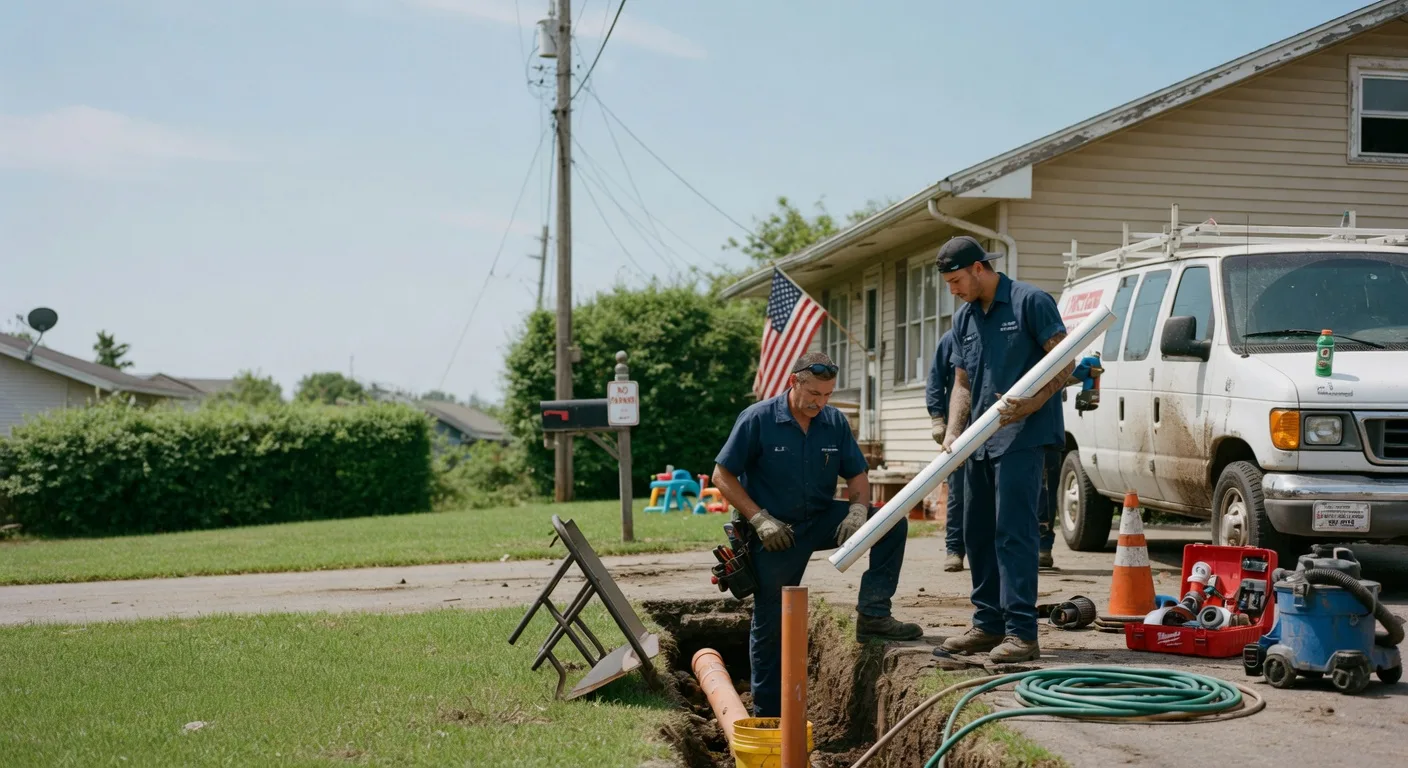
Expert Plumbers Co does not set or quote prices. It connects you with an independent local plumber, and that plumber names the number after seeing the actual problem. Several things drive the cost of a blocked drain. The first is where the clog sits. One slow sink with hair a few feet past the trap is a short cable job, while every drain in the house backing up points to the main line, which needs larger equipment and more time. The second is access. A clear, reachable cleanout keeps the work simple; if the plumber has to pull a toilet to reach the line, that adds labor. The third is the method. A cable machine punches a channel through a clog, hydro jetting scours the full pipe wall, and a camera inspection shows the pipe's condition so the plumber can tell whether cleaning is enough. The fourth is the pipe itself. Roots in clay joints, scale inside cast iron, or a bellied section holding water can turn a cleaning into a repair, and repairs bring in digging or lining, materials, and sometimes a permit. A plumber in Atlanta, GA can narrow this down quickly once you say which fixtures are affected and how long it has been going on.
Before the plumber arrives, write down a few facts that shape the scope of work. Note which fixtures are affected, when the problem started, and whether anything unusual went down the drain beforehand, such as wipes, a large amount of grease, or a child's toy. Find the cleanout, which is usually a capped pipe in the basement, the crawlspace, or outside near the foundation, and clear a path to it. Tell the plumber about any past backups or earlier repairs on that line. Ask them to explain the method before starting, and to say what the next step would be if the first approach does not clear the line. If a camera is used, ask to see the footage so you understand what is wrong. Any work beyond cleaning should be described to you before it begins, including how much has to be opened up and whether a permit applies.
Why do my drains back up only when I run the washing machine?
When the washing machine drains and water comes up in the shower or a floor drain, the machine is rarely the problem. It dumps a lot of water in a short burst, and the line behind it cannot carry that volume away. Something is narrowing the pipe: grease and lint built up on the pipe wall, roots pushing in at a clay joint, or a bellied section that holds water and slows the flow.
Where it shows up tells you a lot. If only the laundry standpipe overflows, the blockage is probably in the branch line serving the machine, and a cable machine often clears that. If the lowest drains in the house gurgle or back up too, the blockage is further down, in the main line or a failed sewer lateral. That is a different job. It usually calls for hydro jetting or a camera inspection to see what is actually in there.
Safe homeowner checks: make sure the drain hose is not jammed tight into the standpipe, and try a smaller load. Do not keep running loads to see if it clears. Every cycle pushes more water toward the lowest opening in the house.
If water is coming up inside the house, stop using the washer, sinks and toilets and call. Expert Plumbers Co is a referral service, not a plumbing company. We refer you to a local plumber for Drain Cleaning in Atlanta, GA: (380) 262-9173.
Watch for a pattern in when it happens, because that helps separate a drain problem from a venting or plumbing layout issue. If the backup always appears on the second or third load, the line is partly blocked and fills as the volume builds. If the washer is on a long run that ties into the main near a bathroom, the surge can push air and water into the nearest fixtures. Older homes often have laundry drains that were added later with a smaller pipe or an awkward connection, which cannot keep pace with a modern machine. A common mistake is placing a lint trap on the end of the drain hose and assuming it solves everything. It catches fibers, but it does not clear buildup already in the pipe. Tell the plumber the machine type and how many loads you run in a day.
Can my downspouts or sump pump cause a sewage backup?
Every drain is gurgling and dirty water comes up the basement floor drain, but only when it rains. That is not one slow sink. Storm water is a prime suspect.
In older housing stock, gutters, a yard drain or a sump pump discharge were sometimes plumbed straight into the sanitary sewer. In a storm, all that extra water floods the house lateral and the municipal main. The pipe runs full, so sewage is pushed back up the lowest opening: a floor drain, a basement shower, a laundry standpipe.
Many jurisdictions now prohibit this. Disconnecting it is often a permit or code matter.
Safe homeowner check: walk the outside of the house. See where each downspout ends. Does it spill onto the ground, or vanish into a pipe in the soil? Does the sump pump discharge run out to daylight, away from the foundation, or into a pipe tied to the house drain? Look only. Do not dig.
Stop running water and call now if more than one fixture is backing up, if sewage is rising, or if it is reaching the floor. A single slow sink is a different job, and a cable machine usually handles it. A storm-driven backup is not a clog, so cabling will not cure it.
A plumber finds the connection with a camera inspection, which shows a tie-in on the pipe, or a dye test, where colored water poured into a downspout or sump shows up in the sewer. What the work involves depends on access, the materials, how much has to be opened up, and any permit requirement.
Expert Plumbers Co is a referral service. We refer homeowners in Atlanta, GA to an independent local plumber for Drain Cleaning and Emergency Drain Cleaning. Call (380) 262-9173.
Once the connection is found, the usual fix redirects the storm water instead of changing the sewer. Downspouts can be extended to discharge onto the ground well away from the foundation, with the soil graded to carry water off. A sump discharge should run outdoors to daylight or to a drainage point that local code accepts.
A common mistake is capping the old pipe at the wall and leaving the buried tie-in open to the sewer. An open stub can still admit soil, roots and water. Ask the plumber to confirm the old connection is sealed at the sewer end, not just hidden from view.
Sump pumps run hardest during the very storms that load the sewer, so a pump that cycles constantly is worth mentioning on the call. After the change, watch the next heavy rain. The floor drain should stay quiet. If it still gurgles, the cause may be the street main or a damaged lateral, not the tie-in.
My sink gurgles after it drains and someone mentioned an air admittance valve. What is that, and can it fail?
"My sink gurgles after it drains" is one of the most common things people notice before a drain problem gets worse. Every fixture needs a vent so water leaving the trap does not pull a vacuum. When air cannot get in, it gets dragged through the trap water instead, and that is the gurgle.
An air admittance valve, or AAV, is a small one-way valve fitted on a vent pipe, often under a sink or in an attic. It opens to let air in as water drains, then drops shut so sewer gas stays in the pipe. Many local codes allow them and some do not, so rules vary by area.
Yes, they can fail. The rubber seal wears, dust or debris stops the flap seating, or the valve sticks. A valve that will not open brings back the gurgling and slow draining. One that will not close lets a sewer smell into the cabinet or room.
A blocked vent stack on the roof, a partial clog in the drain, or a bellied line holding water can also cause gurgling. One gurgling fixture usually points to its own trap, branch line or vent. If the tub, toilet and floor drain all gurgle together, or the toilet bubbles when the washer empties, suspect the main line or the main vent.
Safe homeowner check: Run just the gurgling sink and listen, then run another fixture and see if it does the same. Do not pry at vent parts inside walls, and do not pour drain chemicals into a line that is already gurgling.
Stop running water and call now if sewage smell is strong, water comes up in a tub, shower or floor drain when you use another fixture, a toilet bubbles or rises, or any fixture stops draining.
A cable machine is usually enough for a clog in a single branch line, like the pipe behind one sink. If the gurgle returns, or several fixtures are affected, the plumber may want a camera inspection to look for root intrusion at a clay joint, a bellied line, or a failing section. A blocked roof vent is cleared from the roof, not with a drain cable.
Expert Plumbers Co is a referral service. We connect you with an independent local plumber in Atlanta, GA. Call (380) 262-9173.
Ask the plumber whether an AAV is permitted where you live, or whether a conventional vent is needed instead. Cost depends on access to the pipe, the parts or materials needed, how much wall or ceiling has to be opened, and any permit or code requirement.
Can I rent a hydro jetter or a big drain machine and do the main line myself?
"Can I just rent a hydro jetter and do the main line myself?" You can rent one at many tool shops, so it is a fair question. The honest answer is that it is a bad bet on a main line, for reasons of both pipe and safety.
A hydro jetter pushes water at very high pressure through a hose with a nozzle that pulls itself down the pipe. In the right hands, on sound pipe, it cleans grease and scale off the pipe wall. In the wrong hands it can break old clay or cast iron, wash out joints, drive water into a cracked pipe, or punch through a thin spot. Root intrusion at a clay joint can hold the nozzle, and a bellied line can trap it.
A large drain machine has its own risk. The spinning cable can whip, snag and twist. It can wrap a hand or arm in a second.
There is a bigger issue. Without a camera, you do not know what you are cutting. A main line that backs up may be roots, a bellied line, a collapsed section or a failed sewer lateral. Clearing the blockage may only open a hole through it, and it returns soon after.
Safe homeowner check: Run one fixture at a time and note which drains slowly. Check if it is one fixture or every drain in the house. Do not pour drain chemicals into a line that is backing up.
Stop running water and call now if sewage is coming up in a tub, shower or floor drain, the toilet bubbles or rises when you run other fixtures, or you smell sewage in the house. Stop using water in the house until the line is cleared.
A cable machine is enough for a simple clog in a branch line. Hydro jetting is for grease and scale on the pipe wall. A camera inspection is the step that tells the plumber what is in the pipe and what tool is safe to use, which is what a rental cannot give you.
Expert Plumbers Co is a referral service. We connect you with an independent local plumber in Atlanta, GA. Call (380) 262-9173.
Ask the plumber to show you the camera footage and explain what was found. Ask whether the pipe is sound enough for jetting. Cost depends on access to a cleanout, the parts or materials needed, how much has to be opened up or removed to reach a damaged section, and any permit or code requirement.